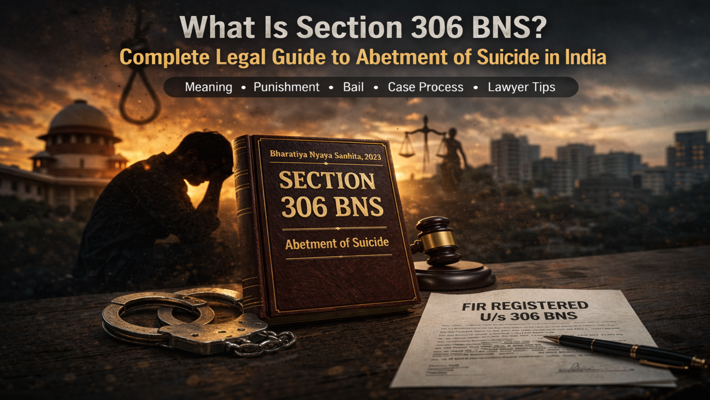
Few legal provisions in India carry the emotional and legal weight of Section 306 BNS. When a case involves allegations of abetment to suicide, it’s not just about law—it’s about human lives, relationships, and serious criminal consequences.
If you’re here, you’re likely trying to understand what 306 dhara actually means, how it applies in real-world situations, and what legal steps should be taken. Whether you’re a concerned individual, a professional, or someone directly involved in a case, the confusion can be overwhelming.
One of the biggest challenges people face is misunderstanding the line between emotional distress and legal abetment. Not every tragic situation leads to criminal liability—but when it does, the consequences are severe, including imprisonment and long-term legal battles.
This is why understanding Section 306 of the Bharatiya Nyaya Sanhita (BNS) is critical. It replaces the earlier 306 IPC framework and brings updated interpretations under modern Indian criminal law.
In this guide, you’ll learn:
- The exact legal meaning of Section 306 BNS
- What constitutes “abetment” under the law
- Punishment and legal consequences
- How courts interpret such cases
- When you need legal help—and how to choose the right advocate
This is not just theory. It’s a practical, experience-driven breakdown designed to help you make informed decisions when it matters most.
Call Now – 9920456025
What Is Advocate (Legal Services)?
An advocate is a legal professional who represents clients in criminal and civil matters, provides legal advice, and ensures your rights are protected under the law.
Advocate Pooja Gupta has been practicing since the last eighteen years and provides legal advisory services.
In cases involving Section 306 BNS, an advocate plays a critical role because:
- The law involves serious criminal charges
- It requires interpretation of intent, conduct, and evidence
- Emotional factors often complicate legal clarity
How Legal Services Work
When dealing with a Section 306 BNS case:
- Initial Consultation – Understanding facts and timeline
- Legal Assessment – Determining whether abetment exists
- Evidence Review – Messages, witness statements, circumstances
- Defense or Complaint Strategy – Depending on your role
- Court Representation – Bail, trial, and arguments
Who It Is For
- Individuals accused of abetment to suicide
- Families seeking justice
- Professionals needing legal clarity
Who It Is NOT For
- Casual advice seekers without legal relevance
- Situations without any factual or evidentiary basis
Call Now – 9920456025
Why You Need Legal Help in Section 306 BNS Cases
Understanding Section 306 BNS
Section 306 BNS deals with abetment of suicide—meaning if a person intentionally aids, instigates, or encourages another person to commit suicide, they can be held criminally liable.
Key Legal Elements
For a case to fall under Section 306 BNS:
- There must be a suicide
- There must be abetment (instigation, conspiracy, or aid)
- There must be a clear link between the act and the outcome
Real-Life Problems It Solves
- Holding individuals accountable for harassment or coercion
- Addressing extreme cases of mental pressure
- Preventing exploitation or abuse
Cost vs Value
- Short-term cost: Legal fees
- Long-term value: Freedom, reputation, and legal protection
Example Scenarios
- Continuous harassment leading to suicide
- Financial or emotional coercion
- False accusations after a tragic incident
Call Now – 9920456025
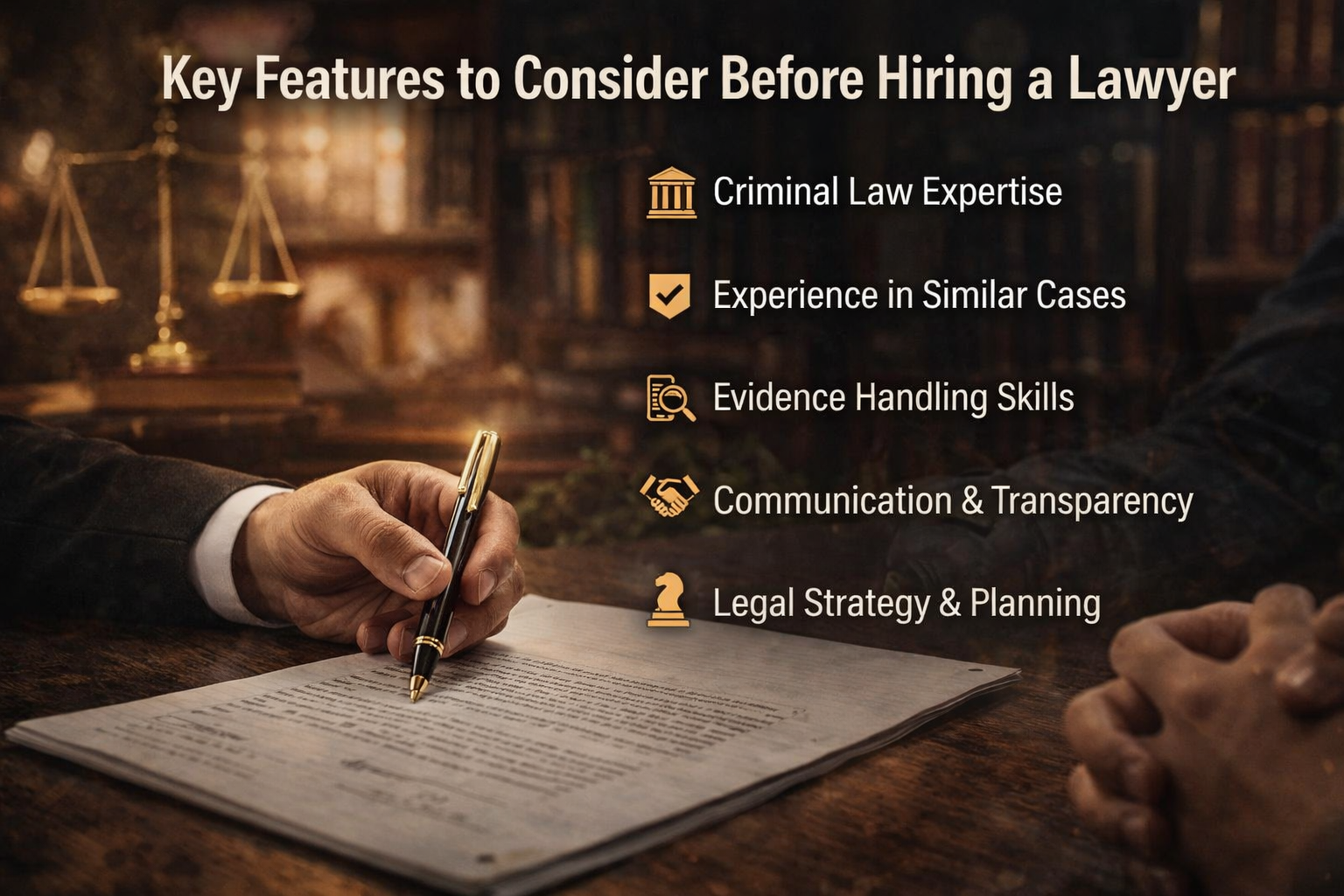
Key Features to Consider Before Hiring a Lawyer
- Criminal Law Expertise
Why it matters:
- Section 306 BNS is a serious criminal offence
- Requires strong courtroom experience
Mistake to avoid:
- Hiring a general lawyer
- Experience in Similar Cases
Why it matters:
- Abetment cases are complex
- Courts focus heavily on intent
- Evidence Analysis Skills
Important evidence includes:
- Messages and chats
- Witness statements
- Behavioral patterns
Why it matters:
- Determines whether abetment exists
- Sensitivity & Confidentiality
These cases are emotionally charged.
Why it matters:
- Protects dignity and privacy
- Strategic Thinking
Why it matters:
- Every case is unique
- Requires customized legal approach
Call Now – 9920456025
Types of Legal Services in Abetment Cases
- Criminal Defense
Best for: Accused individuals
Pros:
- Protection from arrest
- Legal defense
Cons:
- Requires strong evidence
- Victim Representation
Best for: Families of victims
Pros:
- Justice-focused approach
- Legal action against accused
- Legal Consultation
Best for: Understanding risk
Pros:
- Quick clarity
- Affordable
Comparison Table
|
Type |
Best For |
Complexity |
|---|---|---|
|
Defense |
Accused |
High |
|
Victim |
Families |
High |
|
Consultation |
Beginners |
Low |
Call Now – 9920456025
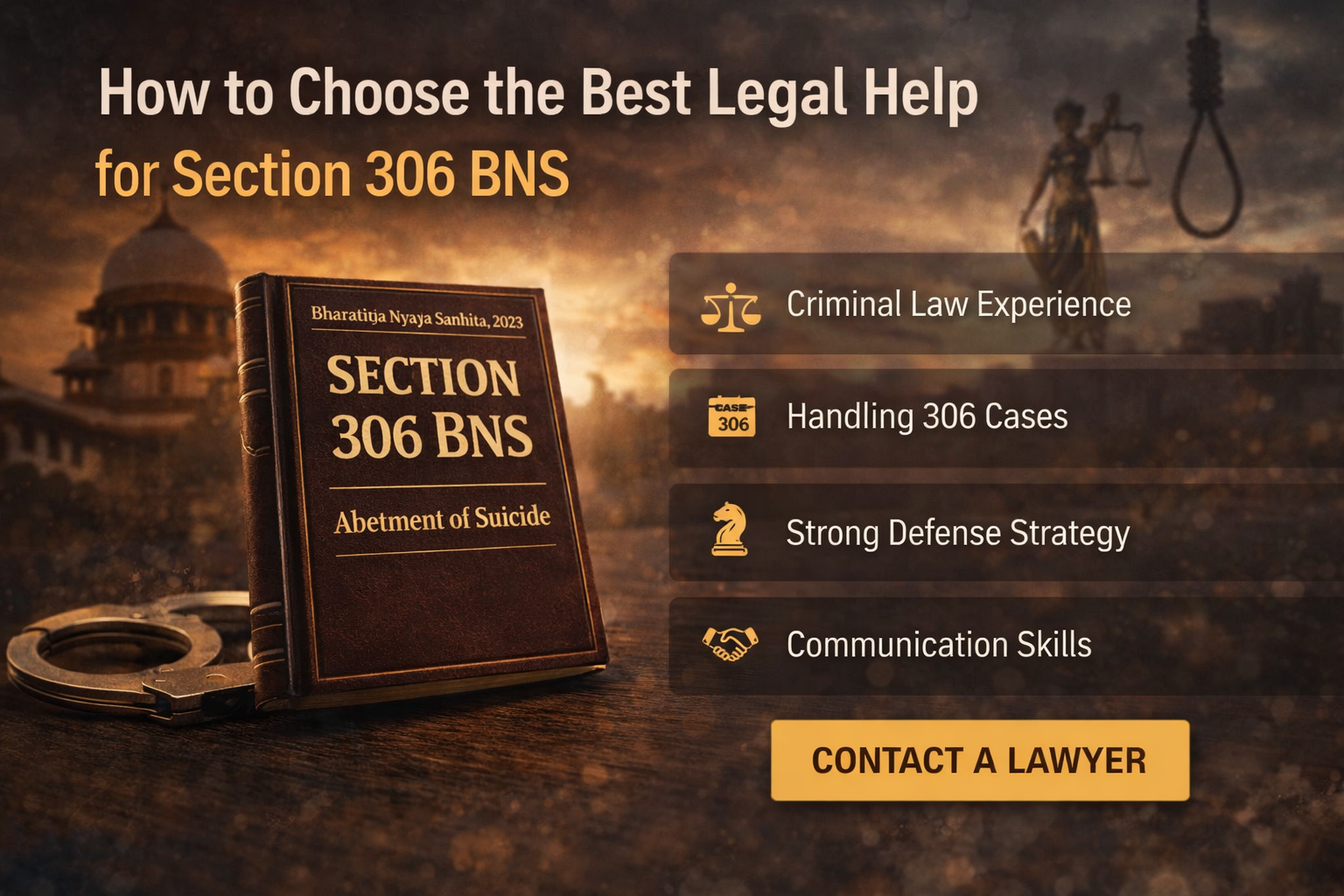
How to Choose the Best Legal Help for Section 306 BNS
Step-by-Step Decision Framework
Step 1: Identify Your Position
- Accused
- Victim’s family
- Third-party
Step 2: Check Specialization
- Criminal law focus
- Experience with 306 dhara cases
Step 3: Evaluate Track Record
- Similar case handling
- Court experience
Step 4: Communication & Transparency
- Honest case assessment
- Clear explanation of risks
Step 5: Budget Planning
|
Budget |
Recommendation |
|---|---|
|
Low |
Consultation |
|
Medium |
Experienced lawyer |
|
High |
Senior advocate |
Use-Case Based Recommendations
- False accusation: Strong defense lawyer
- Genuine case: Victim representation
- Uncertain situation: Start with consultation
Call Now – 9920456025
PRODUCT COMPARISON & BUYER INSIGHT
Pros of Hiring a Lawyer
- Legal protection
- Strategic defense
- Reduced stress
- Better outcomes
Cons
- Legal costs
- Time commitment
Common Mistakes
- Ignoring early warning signs
- Delaying legal help
- Sharing incomplete information
- Relying on emotional decisions
What Lawyers Don’t Tell You
- Not all cases lead to conviction
- Evidence is more important than allegations
- Early legal action improves outcomes
Value-for-Money Perspective
- Legal protection outweighs cost
- Prevention is cheaper than litigation
FAQs
- What is Section 306 BNS?
Section 306 BNS deals with abetment of suicide, where a person is held liable for instigating, aiding, or encouraging another person to take their own life.
- What is 306 dhara?
306 dhara refers to the same legal provision—abetment to suicide—under Indian criminal law.
- What is the punishment under Section 306 BNS?
Punishment may include imprisonment and fines, depending on the severity and circumstances of the case.
- Is Section 306 BNS bailable?
It is generally considered a serious offence, and bail depends on the court’s discretion.
- How is Section 306 different from 306 IPC?
Section 306 BNS replaces the IPC provision with updated legal interpretations under modern law.
- What evidence is required to prove abetment?
Evidence may include communication records, witness testimony, and proof of instigation or coercion.
- Can someone be falsely accused under Section 306 BNS?
Yes, false accusations can occur, which is why proper legal defense is essential.
- How long does a Section 306 case take?
It varies depending on complexity, evidence, and court procedures.
- Can charges be dismissed?
Yes, if evidence is insufficient or legal grounds exist.
- When should I contact a lawyer?
Immediately after any allegation, FIR, or suspicion of legal action.
Call Now – 9920456025
FINAL VERDICT & CTA
Section 306 BNS is one of the most serious provisions in Indian criminal law, dealing with sensitive and complex situations involving human lives and accountability.
Understanding the law is only the first step. The real challenge lies in navigating it correctly.
Whether you are accused, seeking justice, or simply trying to understand your rights, professional legal guidance can make a critical difference. The right advocate will not just represent you—but help you make informed, strategic decisions.
Take the time to assess your situation, seek expert advice, and act early. In legal matters, clarity and timing often determine the outcome.