Monday - Saturday - 10 AM - 08 PM,Sunday - Closed

All Posts

IPC Section 504: Complete Guide to Intentional Insult, Punishment & the BNS Transition

IPC Section 504: Complete Guide to Intentional Insult, Punishment & the BNS Transition

IPC Section 504 makes it a criminal offence to intentionally insult a person with the intent or knowledge that such provocation will cause them to break public peace or commit another offence. It carries a maximum imprisonment of 2 years, a fine, or both. It is a bailable, non-cognizable, and compoundable offence triable by any Magistrate. As of July 1, 2024, IPC Section 504 has been replaced by Section 352 of the Bharatiya Nyaya Sanhita (BNS) for new cases.

What Is IPC Section 504? A Plain-Language Definition

Every society draws a line between harsh words spoken in the heat of the moment and deliberate verbal attacks engineered to ignite violence. IPC Section 504 is precisely that legal line in India.

Section 504 of the Indian Penal Code, 1860, titled “Intentional insult with intent to provoke breach of the peace,” states:

“Whoever intentionally insults, and thereby gives provocation to any person, intending or knowing it to be likely that such provocation will cause him to break the public peace, or to commit any other offence, shall be punished with imprisonment of either description for a term which may extend to two years, or with fine, or with both.”

In simple terms: if you deliberately insult someone — knowing or intending that your words will push them into violence or a public disturbance — you are committing a criminal offence under this section.

This provision sits within Chapter XXII of the IPC, which deals with Criminal Intimidation, Insult, and Annoyance (Sections 503 to 510). It is distinct from defamation (Section 499) or criminal intimidation (Section 506), though these are often invoked together in practice.

The Three Essential Ingredients of IPC Section 504

For a court to convict someone under IPC Section 504, the prosecution must establish all three elements without reasonable doubt:

1. Intentional Insult

The insult must be deliberate and conscious — not accidental, not a misunderstanding. Words spoken carelessly in anger, without specific intent to provoke, may not qualify. The law distinguishes between being rude and weaponizing rudeness.

2. Provocation Given to the Victim

The insult must actually give provocation — meaning the victim must be affected to the point where breaking the peace becomes a likely reaction. A mere exchange of unpleasant words in a private argument typically does not suffice.

3. Intent or Knowledge of Likely Breach of Peace

The person insulting must either intend the victim to breach the peace or know it is likely to happen. This mental element (mens rea) is the cornerstone of the section. If the accused had no such intent or knowledge, the charge under Section 504 weakens significantly.

Section 504 IPC Punishment: What Does the Law Prescribe?

Aspect Detail
Maximum Imprisonment 2 years (simple or rigorous)
Fine As determined by the court (no minimum specified)
Combination Imprisonment + fine both possible
Cognizability Non-cognizable
Bailability Bailable (bail is a right, not discretion)
Compoundability Compoundable (parties can settle)
Trial Court Any Magistrate

The punishment is not rigid — courts have discretion to award imprisonment, fine, or both, depending on the gravity and circumstances of the offence.

Is IPC Section 504 Bailable or Non-Bailable?

IPC Section 504 is a bailable offence.

This means the accused has a right to bail — police or the Magistrate cannot refuse bail arbitrarily. The grant of bail is not a matter of judicial discretion under bailable offences; it is the accused’s legal right.

Additionally, since it is a non-cognizable offence, the police cannot arrest a person without a warrant from the competent court. This is a critical protection for the accused: unlike offences such as murder or robbery, a police officer cannot arrest someone under IPC 504 based only on a complaint.

What this means in practice:

  • The victim must file a complaint before a Magistrate (not just at the police station).
  • The Magistrate evaluates whether a case is made out before issuing process.
  • The accused, once summoned, can also apply for anticipatory bail under Section 438 CrPC (now Section 484 of the BNSS).

Since it is also a compoundable offence, the complainant and the accused can mutually settle the matter and the case can be withdrawn — making mediation and out-of-court resolution a viable path.

IPC Section 504 in BNS: What Changed After July 1, 2024?

This is perhaps the most important update for anyone researching this topic today.

On July 1, 2024, the Indian Penal Code, 1860 was formally replaced by the Bharatiya Nyaya Sanhita (BNS), 2023, which received Presidential assent on December 25, 2023. The BNS renumbered and restructured the entire criminal code.

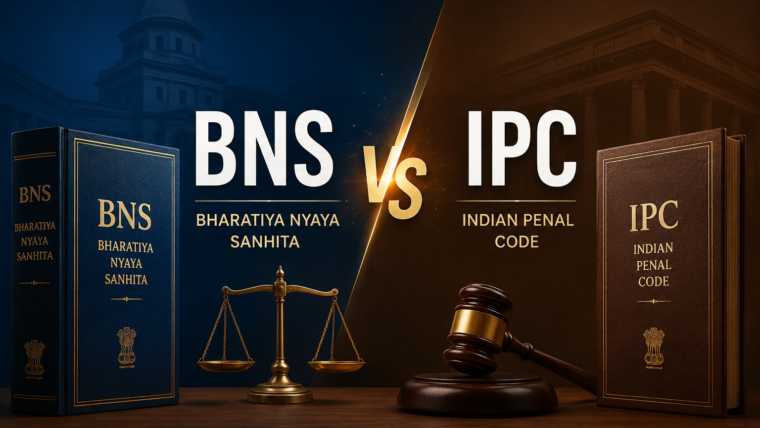
IPC Section 504 is now Section 352 of the BNS.

IPC 504 vs BNS Section 352: Key Comparison

Feature IPC Section 504 BNS Section 352
Title Intentional insult with intent to provoke breach of peace Intentional insult with intent to provoke breach of peace
Punishment Up to 2 years, fine, or both Up to 2 years, fine, or both
Cognizability Non-cognizable Non-cognizable
Bailability Bailable Bailable
Compoundable Yes Yes
Applicability Cases before July 1, 2024 Cases from July 1, 2024 onward
Procedure Law CrPC BNSS
Evidence Law Indian Evidence Act Bharatiya Sakshya Adhiniyam (BSA)

Important Legal Note: Cases registered (FIRs filed) before July 1, 2024 continue to be tried under the IPC. Only new FIRs filed on or after July 1, 2024 are governed by the BNS. Courts have clarified that proceedings for pending investigations on or after July 1, 2024 must follow BNSS procedurally, while substantive IPC provisions apply to pre-transition offences.

Digital Evidence Under BNS Section 352 (2026 Update)

A significant practical development: with the BNS and the Bharatiya Sakshya Adhiniyam (BSA) now in force, digital evidence such as WhatsApp screenshots, voice notes, and social media posts used in Section 352 BNS cases must comply with Section 63 of the BSA, which requires a certificate authenticating the electronic record. This makes prosecuting online insults more procedurally structured than before.

Real-World Examples of IPC Section 504

Understanding a law through examples is often more revealing than reading the text itself.

Example 1: The Workplace Verbal Attack

A manager publicly berates an employee using deeply offensive casteist slurs in front of colleagues, knowing that the employee has a short temper and is likely to retaliate physically. The manager’s conduct — intentional, targeted, and with knowledge of probable breach of peace — fits Section 504 IPC squarely.

Example 2: The Neighbourhood Dispute

Two neighbours have an ongoing property dispute. One deliberately uses insulting language about the other’s family in a public gathering, intending for the other to react violently and be seen as the aggressor. This calculated provocation is a classic Section 504 scenario.

Example 3: Social Media Abuse

A person sends a series of escalating WhatsApp messages to another, calling them names and making offensive comments about their religion, knowing that the recipient is likely to retaliate aggressively. Post-July 2024, this falls under BNS Section 352, and chat screenshots would require a BSA Section 63 certificate for use as evidence.

Example 4: What Does NOT Qualify

A heated argument between friends where both exchange unpleasant words without any deliberate plan to provoke a breach of peace would generally not attract Section 504. The key distinction is the intentional and targeted nature of the insult with knowledge or intent regarding likely breach of peace.

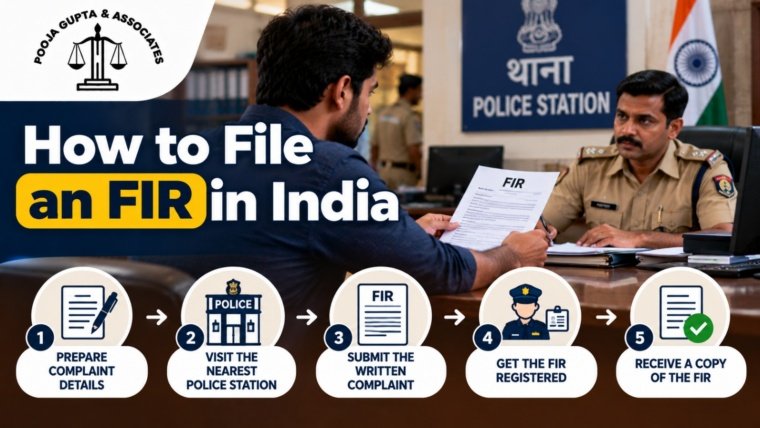
How to File a Complaint Under IPC Section 504

Read more

Our Office Address

Office No. 2 & 3,Ground Floor,Shrishti CHS Ltd,Plot No. 96,Sector-27.Opp.Dr. Sonawane Orthopaedic Hospital,Seawood(E),Navi Mumbai-400706.

Our Phone Number

+91 99204 56025+91 98703 62023

Our Office Time

Monday - Saturday - 10:AM - 08:PM, Sunday - Closed

Newsletter

Get latest updates and offers.

Pooja Gupta & Associates 2022. All rights reserved. Website Development & Marketing By Tap to Digital