
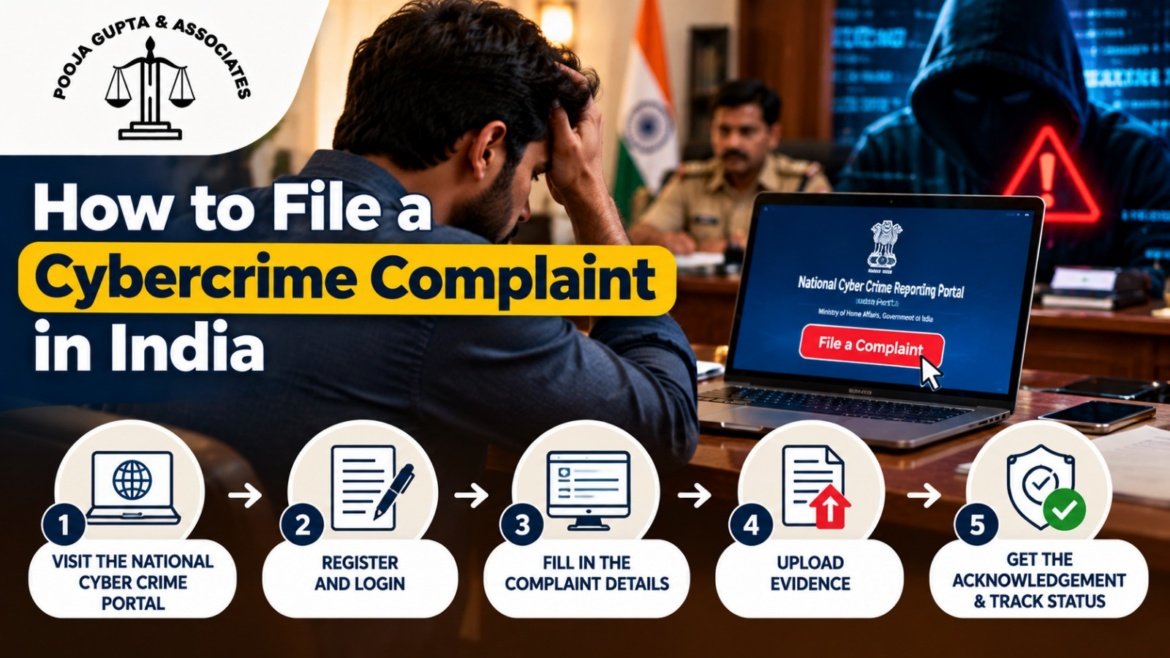
To file a cybercrime complaint online in India, call the 1930 Cyber Crime Helpline immediately if you’ve lost money to fraud, or file directly on the National Cyber Crime Reporting Portal (NCRP) at cybercrime.gov.in. The 1930 helpline is available 24/7, toll-free, and operated by the Indian Cyber Crime Coordination Centre (I4C) under the Ministry of Home Affairs. Calling promptly can help freeze the specific fraudulent transaction before funds move further, but it’s important to understand: filing a complaint initiates an investigation and a possible fund freeze — it does not guarantee a refund, which depends on the transaction trail, fund availability, and legal proceedings that can take months.
Understanding India’s Cybercrime Reporting System
India’s cybercrime reporting infrastructure centres around two connected components:
- The 1930 Helpline — a 24-hour phone number specifically for reporting financial cyber fraud, designed for speed when money has just been lost
- The National Cyber Crime Reporting Portal (NCRP) — cybercrime.gov.in, where complaints are formally registered, tracked, and routed to the appropriate law enforcement agency
Both feed into the same underlying system, and for financial fraud specifically, a 2026 Standard Operating Procedure connects 1930 directly with the Citizen Financial Cyber Fraud Reporting and Management System (CFCFRMS), which coordinates with banks and financial institutions to act quickly on reported fraud.
Cyber Crime Helpline Number: What 1930 Actually Does
The 1930 Cyber Crime Helpline number was originally launched as 155260 in 2020 (a joint initiative of I4C, the Reserve Bank of India, and banks), and renamed to the easier-to-remember 1930 in 2021. It handles a large and growing volume of complaints — cybercrime cases reported in India numbered over 86,000 in 2023 alone, and have continued rising since.
Is 1930 available 24 hours? Yes — 1930 operates 24/7, specifically because financial fraud requires urgent action; the sooner a fraudulent transaction is reported, the better the chance of freezing the funds before they’re moved further through the financial system.
What Happens When You Call 1930
- The operator records your transaction and personal details, and checks that your complaint genuinely involves a cyber-enabled financial crime (the system is specifically for this category, not general complaints)
- You receive a 14-digit acknowledgment number starting with “3”, sent via SMS
- You must complete the full complaint on the NCRP portal using this acknowledgment number, within the specified timeframe — failing to do this can delay processing
- Once verified, your complaint enters the CFCFRMS system, which alerts the relevant banks and financial institutions to place a hold on the disputed transaction amount
Importantly, this places a hold on the specific transaction amount involved, not a freeze on the scammer’s entire bank account — a full account seizure requires separate legal procedures.
What About a “WhatsApp Cyber Crime Helpline Number”?
The National Cyber Crime Reporting Portal maintains an official WhatsApp Channel (alongside its Facebook, Twitter, and Telegram presence) primarily for updates, alerts, and awareness content — this is different from a dedicated WhatsApp number for filing complaints directly through chat. For actually reporting an incident, the verified, official channels remain the 1930 phone helpline and the cybercrime.gov.in portal. Be cautious of any unofficial number circulating online claiming to be a “WhatsApp cybercrime helpline” — verify against the official NCRP website before sharing any personal or financial information.
Procedure to File a Cyber Crime Complaint in India: Step-by-Step
Step 1: Act Quickly, Especially for Financial Fraud
If money has just left your account due to an online scam, call 1930 immediately — don’t spend time searching for the “right” police station first.
Step 2: Inform Your Bank
Alongside reporting to 1930, contact your bank’s official fraud-reporting channel directly, since banks can sometimes take independent action to flag or hold a transaction.
Step 3: Choose the Right Complaint Category on NCRP
The portal separates complaints into three categories:
- Financial Fraud — for money lost through online scams, fake investment schemes, UPI fraud, etc.
- Women/Children Related Crime — for offences specifically involving women or children, including certain sexually explicit content, which can be reported with an anonymous option in specific circumstances
- Other Cyber Crime — for incidents like hacking, data breaches, or online harassment that don’t fall into the above categories
Step 4: Register and Provide Details
For most categories (aside from specific anonymous-eligible complaints), NCRP requires registration with your name and a valid Indian mobile number. Provide a clear, chronological, fact-based account of the incident.
Step 5: Preserve Evidence
Keep screenshots, transaction records, the scammer’s phone numbers or WhatsApp/Telegram details, URLs, email addresses, QR codes, payment requests, and chat history. Do not delete conversations, even uncomfortable ones — they can help investigators reconstruct what happened.
Step 6: Submit and Save Your Acknowledgment
Once submitted, save your complaint acknowledgment number — this is essential for tracking your complaint’s status going forward.
Does Cyber Crime Reporting Guarantee a Refund?
This is one of the most important things to understand honestly: calling 1930 or filing an NCRP complaint does not guarantee your money will be refunded. Here’s what actually happens:
- Reporting quickly can result in a hold being placed on the specific transaction amount, if the funds haven’t already moved further
- Recovery depends heavily on the transaction trail — how quickly the money was moved, whether it’s still traceable, and whether the receiving account still holds the funds
- If and when funds are recovered, they are typically deposited in court or police custody, and a court order is required to release the refund to the victim — this process can take months to years
- If multiple people were defrauded by the same scheme, partial recovery is often distributed proportionally among victims, rather than any one victim receiving full compensation first
Reporting promptly genuinely improves your chances, but no legitimate source — including the government’s own portal — promises a guaranteed recovery percentage.
Who Can File a Cyber Crime Complaint?
The victim of the cybercrime is the primary complainant, but under the 2026 SOP, a representative acting on behalf of the victim can also file a complaint, provided their identity and relationship to the victim can be verified through the system. This is particularly relevant for elderly victims or those unfamiliar with digital reporting processes, who may need a family member or trusted person to assist.
How to Report a Person for Cybercrime
If you want to report a specific individual — for harassment, fraud, impersonation, or a similar offence — the process is the same: file through the NCRP under the relevant category (typically “Other Cyber Crime” or “Women/Children Related Crime,” depending on the nature of the offence), providing all identifying details you have about the person, such as their phone number, social media handles, or any accounts associated with them. You can also flag suspicious phone numbers, URLs, or handles directly through the portal, even without a full formal complaint.
What Law Applies to Cybercrime Complaints?
Cybercrime complaints are typically investigated under a combination of the Information Technology Act, 2000 and relevant provisions of the Bharatiya Nyaya Sanhita (BNS), 2023 (which replaced the Indian Penal Code from 1 July 2024), depending on the specific nature of the offence — fraud, identity theft, harassment, or data breach provisions may apply differently based on the facts of each case.
Common Mistakes That Weaken a Cybercrime Complaint
- Waiting too long to report, reducing the chance of freezing funds before they’re dispersed further
- Deleting evidence out of embarrassment or discomfort, when it could be crucial for investigation
- Providing vague or non-chronological details, making it harder for investigators to act on the complaint
- Assuming small-value fraud won’t be investigated — while high-value organised fraud often gets priority, smaller complaints are still logged and can contribute to identifying repeat offenders through pattern analysis
- Entering sensitive information on unofficial websites reached through random ads or unsolicited links, rather than the verified cybercrime.gov.in portal
FAQs
Q1. Does cyber crime reporting guarantee money will be refunded?
No. Reporting to 1930 or NCRP can result in a hold being placed on the disputed transaction amount, but an actual refund requires a court order after the case concludes, which can take months to years, and depends on whether the funds are still traceable and recoverable.
Q2. How do I report a person for cybercrime?
File a complaint on the National Cyber Crime Reporting Portal under the relevant category (Financial Fraud, Women/Children Related Crime, or Other Cyber Crime), providing all identifying details about the person, such as phone numbers, social media handles, or associated accounts.
Q3. Who can file a cyber crime complaint?
The victim can file directly, and under the 2026 SOP, a representative acting on behalf of the victim can also file a complaint, provided their identity and relationship to the victim are verified through the system.
Q4. Is the 1930 cyber crime helpline available 24 hours?
Yes, the 1930 helpline operates 24/7, since prompt reporting of financial fraud significantly improves the chance of freezing stolen funds before they move further through the financial system.
Q5. Is there a WhatsApp number for filing cyber crime complaints in India?
The National Cyber Crime Reporting Portal has an official WhatsApp Channel for updates and awareness, but complaints should be filed through the verified 1930 helpline or the cybercrime.gov.in portal directly, not through unofficial WhatsApp numbers.
Q6. What is the procedure to file a cyber crime complaint in India?
Call 1930 for financial fraud (or go directly to cybercrime.gov.in for other cybercrimes), choose the appropriate complaint category, register with your details, provide a clear chronological account with supporting evidence, and save your acknowledgment number for tracking.
Q7. Can I file a cyber crime complaint anonymously?
Generally, no — most categories on NCRP require registration with your name and a valid Indian mobile number. A limited anonymous reporting option exists specifically for certain sexually explicit content-related complaints.
Sources
- Indian Cyber Crime Coordination Centre (I4C), Ministry of Home Affairs
- National Cyber Crime Reporting Portal — cybercrime.gov.in
- 2026 NCRP-CFCFRMS Standard Operating Procedure
Related Reading
Need Legal Help With a Cybercrime Matter?
If you’ve been a victim of cyber fraud and need guidance beyond the initial complaint, or if you’re facing allegations related to a cybercrime, Advocate Pooja Agrawal & Associates provides criminal law representation across Navi Mumbai, including cybercrime matters requiring court intervention.
Disclaimer: This article is for general informational purposes and does not constitute legal advice. Cybercrime procedures and recovery timelines vary by case — consult a qualified lawyer or the official NCRP portal for guidance specific to your situation.