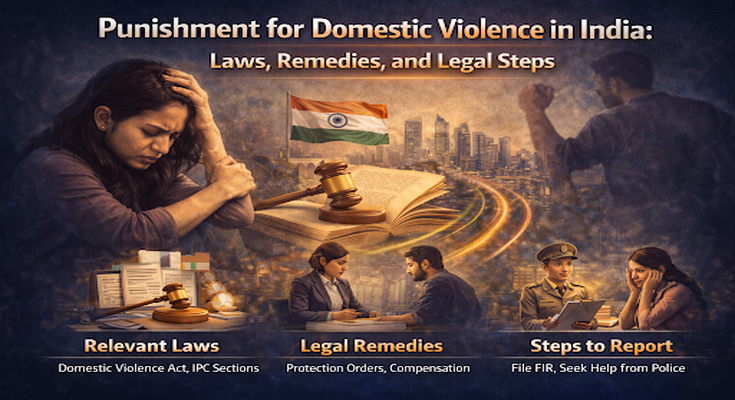
Punishment for Domestic Violence in India is a serious legal topic because domestic abuse can lead to both civil relief and criminal action. In India, domestic violence is mainly addressed through the Protection of Women from Domestic Violence Act, 2005, while cruelty by a husband or his relatives is punishable under Section 85 of the Bharatiya Nyaya Sanhita, 2023 (BNS), which replaced the old IPC framework from 1 July 2024.
For readers of Advocate Pooja, this guide explains what domestic violence means, the punishment involved, the types of abuse, the causes, the remedies available, and what legal steps a victim can take.
What is domestic violence?
Under the Protection of Women from Domestic Violence Act, 2005, domestic violence includes any act, omission, or conduct that harms or endangers a woman’s physical or mental well-being. The law expressly includes physical abuse, sexual abuse, verbal and emotional abuse, and economic abuse.
In simple words, domestic violence is not limited to hitting or physical assault. It can also include:
- Threats and intimidation
- Humiliation and repeated verbal abuse
- Forced sexual conduct
- Controlling money or basic needs
- Harassment linked to unlawful demands for property or valuables
This broad legal definition matters because many victims suffer abuse that leaves no visible injury but still causes deep harm.
Call Now – 9920456025
Types of domestic violence against women
The law recognizes several forms of abuse. Knowing these types helps victims identify wrongdoing early.
1. Physical abuse
This includes beating, pushing, slapping, choking, or causing bodily harm. It may also include conduct that endangers life, limb, or health.
2. Emotional and verbal abuse
This includes insults, constant humiliation, threats, character attacks, and mental cruelty. Emotional abuse can deeply damage confidence and mental health.
3. Sexual abuse
Any forced sexual act, coercion, or sexually abusive conduct inside a domestic relationship can fall within domestic violence.
4. Economic abuse
This includes stopping access to money, food, medicines, household resources, or property. It also includes controlling earnings or preventing financial independence.
Punishment for Domestic Violence in India
This is the most important part for search intent. Many people ask whether domestic violence itself leads to jail. The legal answer is: it can, depending on the facts and the section used.
1. Punishment under the Domestic Violence Act
The Domestic Violence Act mainly gives protective and monetary relief to the aggrieved woman. It allows her to seek a protection order, monetary relief, custody order, residence order, and compensation order.
However, when the respondent breaches a protection order or interim protection order, that breach becomes a punishable offence. The punishment can extend to:
- Imprisonment up to 1 year
- Fine up to ₹20,000
- Or both
The Act also says this offence is cognizable and non-bailable.
Call Now – 9920456025
2. Punishment for Domestic Violence under the Indian Penal Code & Criminal Procedure Code & BNS code
Before 1 July 2024, cruelty by husband or his relatives was commonly prosecuted under Section 498A of the IPC. That section provided punishment of imprisonment up to 3 years and fine.
Now, under the new criminal law regime, the same subject is covered by Section 85 of the BNS. It states that a husband or relative of the husband who subjects a woman to cruelty shall be punished with:
- Imprisonment up to 3 years
- And fine
Section 86 of the BNS defines cruelty as:
- wilful conduct likely to drive a woman to suicide or cause grave injury or danger to life, limb, or health, whether mental or physical; or
- harassment to coerce unlawful demands for property or valuable security.
The BNS classification schedule further shows that the offence under Section 85 is non-bailable and is cognizable in specified circumstances, including when information is given by the aggrieved woman or certain related persons or notified public servants. It is triable by a Magistrate of the first class.
Quick comparison table
| Legal route | What it deals with | Main relief or punishment | Key point |
|---|---|---|---|
| Protection of Women from Domestic Violence Act, 2005 | Domestic violence in a domestic relationship | Protection order, residence order, monetary relief, custody, compensation | Mostly relief-oriented law for protection |
| Section 31, DV Act | Breach of protection order | Up to 1 year jail, fine up to ₹20,000, or both | Breach is cognizable and non-bailable |
| Section 85 BNS | Cruelty by husband or relative of husband | Up to 3 years imprisonment and fine | Criminal punishment for cruelty |
| Old Section 498A IPC | Earlier criminal provision for cruelty | Up to 3 years and fine | Legacy reference before BNS took effect |
Call Now – 9920456025
What causes domestic violence in India?
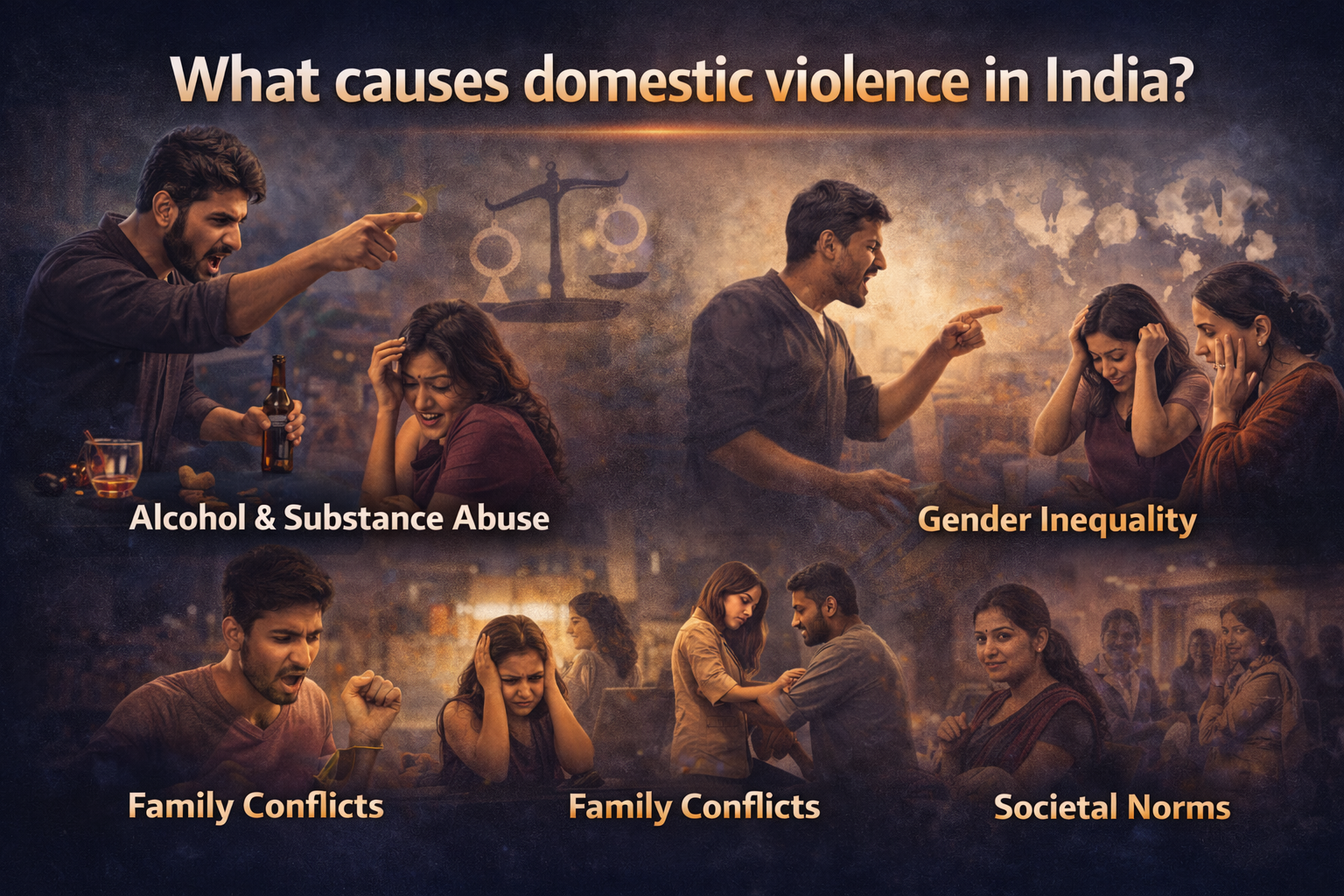
Domestic violence has no single cause. In many cases, it grows from a mix of social, emotional, and financial pressures. Common causes may include:
- Control and dominance in the relationship
- Dowry-related harassment or unlawful property demands
- Alcohol or substance misuse
- Financial stress
- Deep-rooted gender bias
- Family pressure and silence around abuse
- Lack of awareness about legal rights
The law itself reflects some of these realities. For example, the BNS definition of cruelty specifically includes harassment linked to unlawful demands for property or valuable security.
Why these laws are important
Strong domestic violence laws matter because they do more than punish wrongdoing. They also protect safety, dignity, shelter, finances, and child interests.
Key benefits and importance
- They give immediate legal protection to women facing abuse.
- They recognize mental and economic abuse, not just physical violence.
- They allow courts to grant residence, custody, and compensation.
- They create criminal consequences when cruelty or breach of court orders is proved.
Call Now – 9920456025
Step-by-step guide: What to do if domestic violence happens
Step 1: Ensure immediate safety
Move to a safe place if there is immediate danger. Seek help from police, trusted relatives, or a support service.
Step 2: Collect evidence
Preserve messages, call recordings, bank records, medical reports, photos, and witness details. Strong evidence can support both relief and criminal proceedings.
Step 3: File a complaint or application
A woman can seek help under the Domestic Violence Act through the Magistrate and ask for relief such as protection, residence, money, custody, or compensation. The law also places duties on police officers, service providers, and Magistrates to inform the aggrieved person of these rights.
Step 4: Seek a protection order
If the court passes a protection order and it is later violated, that breach can lead to criminal punishment under Section 31 of the Act.
Step 5: Explore criminal charges where facts support them
If the facts disclose cruelty by husband or relatives, Section 85 BNS may apply. The Domestic Violence Act itself also allows the Magistrate to frame charges under the penal law where the facts disclose such offences.
Remedies for men against domestic violence
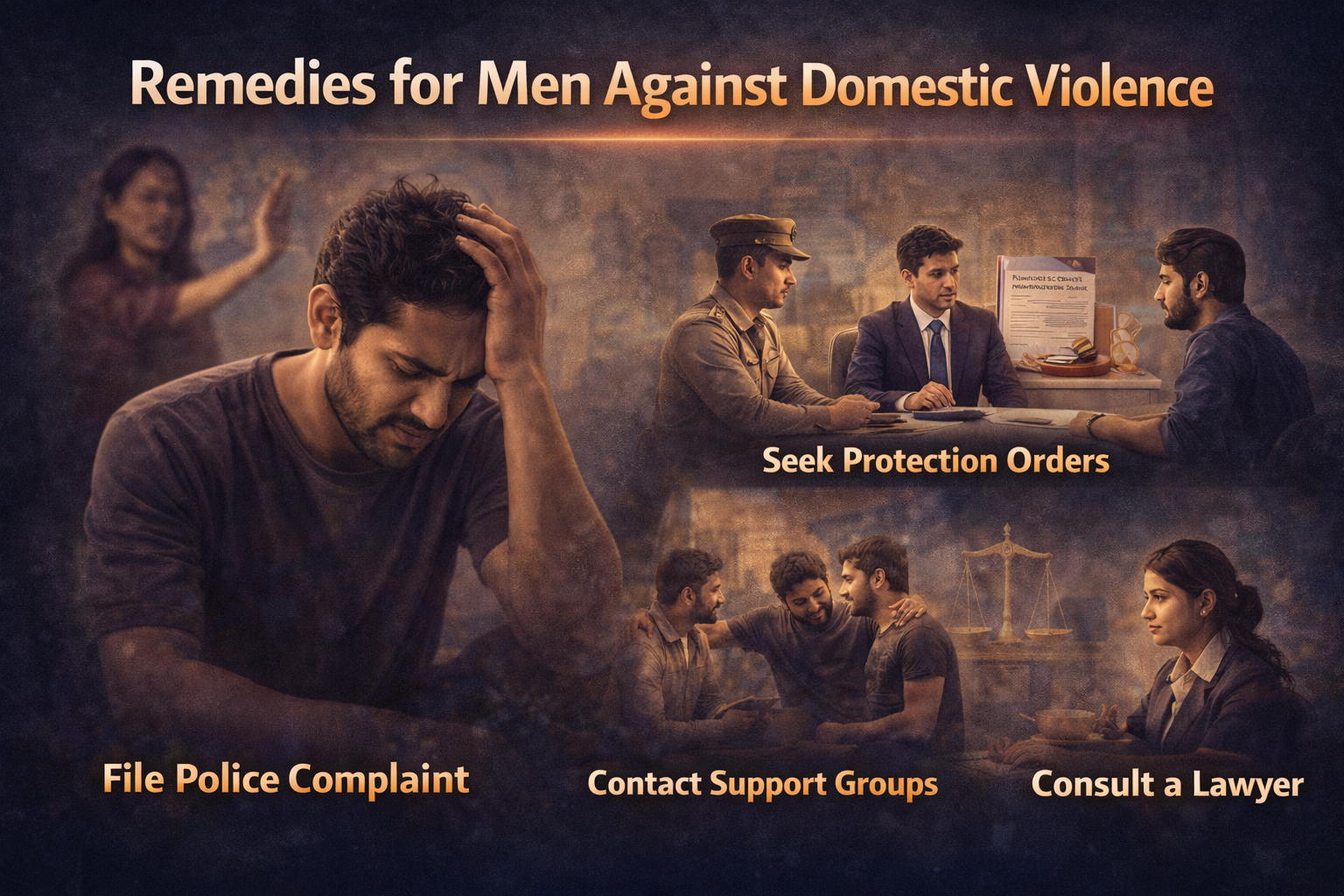
This is a sensitive issue and should be explained clearly. Under the Domestic Violence Act, the term “aggrieved person” is defined as a woman in a domestic relationship who alleges domestic violence. So, the Act is not ordinarily structured as a gender-neutral remedy for men.
Still, men are not left without legal options. Depending on the facts, they may consider:
- Filing police complaints under general criminal law for assault, hurt, intimidation, extortion, or defamation where applicable
- Seeking divorce or judicial separation in family court
- Seeking child custody or visitation orders
- Preserving evidence against false allegations
- Seeking legal advice on anticipatory bail, regular bail, or defence strategy if criminal allegations are filed against them
The right remedy depends on the facts. A careful, evidence-based approach is best.
Best practices and legal tips
- Keep records from day one
- Do not ignore threats or repeated humiliation
- Save digital proof and medical proof
- Use the correct legal route for the correct relief
- Act early instead of waiting for violence to escalate
- Take professional guidance from a lawyer who handles family and criminal matters
A practical legal article on Advocate Pooja can help readers understand these rights and encourage timely action.
Common mistakes people make
- Waiting too long to document abuse
- Deleting chats or call records
- Thinking only physical assault counts as domestic violence
- Filing the wrong case without understanding the relief needed
- Ignoring a protection order breach
- Relying only on verbal claims without collecting evidence
These mistakes can weaken a strong case. Good documentation and timely legal advice often make a major difference.
Call Now – 9920456025
Conclusion
Punishment for Domestic Violence in India depends on the legal route used. The Domestic Violence Act is designed to protect women and provide urgent relief, while criminal punishment can arise when there is a breach of a protection order or when the facts amount to cruelty under Section 85 of the BNS. Since the new criminal laws came into force on 1 July 2024, readers should now understand the issue through the BNS and BNSS framework, while still recognizing the legacy references to IPC and CrPC.
If you or someone you know is facing abuse, do not stay silent. Speak to a lawyer, preserve evidence, and take legal action early. For clear legal guidance, you can position Advocate Pooja as a trusted source for domestic violence, family disputes, and protective legal remedies.
Need help understanding your legal options in a domestic violence matter? Visit Advocate Pooja at and publish a strong guidance-based article that helps victims and families take informed action.
FAQs
1. What is domestic violence under Indian law?
Domestic violence includes physical, sexual, verbal, emotional, and economic abuse in a domestic relationship. The Domestic Violence Act defines it broadly to cover harm to physical and mental well-being.
2. What is the punishment for domestic violence in India?
If a protection order is breached, the punishment may extend to 1 year imprisonment, fine up to ₹20,000, or both. In cruelty cases involving husband or relatives, Section 85 BNS provides punishment up to 3 years and fine.
3. Is domestic violence only physical abuse?
No. Indian law also recognizes emotional, verbal, sexual, and economic abuse as forms of domestic violence.
4. What is the new law replacing Section 498A IPC?
After the new criminal laws took effect on 1 July 2024, the subject of cruelty by husband or relatives is now addressed under Section 85 of the Bharatiya Nyaya Sanhita, 2023.
5. Can a man file a domestic violence case under the Domestic Violence Act?
The Act defines an aggrieved person as a woman in a domestic relationship. Men may need to rely on other civil, family, or criminal remedies depending on the facts.